
Indian equities on Dalal Street saw volatility. Track Sensex, Nifty50 movement and key market drivers for Feb 25, 2026.

Indian benchmark stock indices, Sensex and Nifty, surged over 1 per cent, driven by optimism surrounding potential US-Iran peace talks and a significant drop in crude oil prices below the USD 100 per barrel mark. This de-escalation in geopolitical concerns and easing inflation pressures provided a substantial boost to investor sentiment.

Indian paint majors, including Asian Paints, Berger Paints, and Kansai Nerolac, reported better-than-expected performance in Q4FY26, driven by steady demand, improved product mix, and strategic price hikes. The sector is also benefiting from reduced competitive intensity as new players also increase prices, narrowing the gap with incumbents.

Sri Lanka A finally found a way to get over the line against India A following a Super Over in an emotionally charged tri-series game in Dambulla on Monday.

The broader conflict in West Asia, the largest international market for Indian carriers, has forced a sharp reduction in daily flights relative to the summer schedule.

Indian benchmark equity indices, Sensex and Nifty, surged over 1 per cent, driven by a significant correction in crude oil prices and a global market rally, fueled by improving sentiment surrounding potential US-Iran negotiations.

'Today, we see people go on ChatGPT to ask 'can you plan my holiday' and then they have to go outside of the ChatGPT window to make all the bookings and so how can we complete that really high-intent use case that a user has come to ChatGPT with and help them complete that all the way within the chat GPT window.'

Prime Minister Narendra Modi on Sunday used two major public engagements in Kolkata to outline a broader vision for India's future -- one rooted in inner balance and collective well-being through yoga, and the other in national self-reliance and maritime strength.

For the foreseeable future, the most likely outcome remains continuation of the status quo. Taiwan will remain self-governing without formally declaring independence, while China continues to apply sustained pressure short of war, predict Krishnan Srinivasan and Manoj Mohanka.

India's leading listed real estate developers are increasingly focusing on pan-India expansion, diversifying beyond their traditional home markets into high-demand residential areas like MMR, NCR, Bengaluru, Hyderabad, Pune, and Chennai to tap broader housing demand and reduce reliance on single-city market cycles.

The asymmetry in deposit and credit growth is the biggest challenge before the Indian banking industry. For every 100 deposit that a bank mobilises, it needs to keep 3 with the banking regulator in the form of cash reserve ratio on which it doesn't earn any interest. Another 18 is used for buying government bonds (statutory liquidity ratio). This means, a bank is left with 79 for giving credit. Add to this, its capital which can be used for giving loans. Most banks are facing a fund crunch. They need to find ways to attract deposits if they want to sustain credit growth, explains Tamal Bandyopadhyay.

A recently finalised peace deal between the US and Iran, set to be signed on June 19, is expected to significantly benefit India's economy by boosting exports to West Asia, stabilising the rupee, and easing inflationary pressures, according to exporters and experts.

Sensex plunges over 1,400 points and Nifty slips near 22,250 amid Trump's Iran threat, rising crude oil prices, and FII selling. Here are the key reasons behind today's market crash.

Foreign investors have aggressively sold off Indian equities, withdrawing over 48,213 crore in the first 10 days of April, following a record 1.17 lakh crore outflow in March, driven by escalating geopolitical tensions in West Asia, rising crude oil prices, and global inflation concerns.

Reliance Industries Ltd (RIL) has expressed caution regarding 'extreme volatility' risks stemming from the West Asian conflict, which could impact global oil demand and the company's margins, while also noting that near-term retail consumption demand may remain sensitive to macro conditions. Chairman Mukesh Ambani, in the annual report, remained silent on the timeline for Jio Platforms' anticipated public listing, stating the group will 'continue to evaluate strategic pathways'.
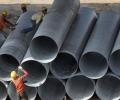
India has successfully negotiated the protection of its steel export interests under the free trade agreement with the UK, ensuring 85 per cent of its outbound shipments remain outside Britain's steel safeguard measures. This consensus addresses a key sticking point ahead of the comprehensive economic and trade agreement (CETA) coming into force on July 15.

Eighteen of India's 28 states exceeded the fiscal deficit ceiling of 3 per cent of GSDP in FY25, a deterioration comparable to the Covid year of 2020-21, according to the Comptroller and Auditor General (CAG). The report also noted a decline in states reporting a revenue surplus, with Bihar, Mizoram, and Telangana moving into deficit.

Much will depend on how the protagonists use the current interlude to work proactively for the beginning of a durable settlement or, on the contrary, prepare for a new round of escalation, points out Ambassador M K Bhadrakumar.

The SIF vertical, which allows MFs to offer complex products to relatively sophisticated investors, has managed to garner scale in just seven months of the launch of the first products.

Indian equity benchmark indices, Sensex and Nifty, ended marginally lower in a volatile trading session, surrendering early gains due to profit-taking in blue-chip stocks and persistent macroeconomic concerns, despite positive global cues.

The support will be provided to oil-marketing companies (OMCs) in the form of interest-free advances through the ministry of petroleum and natural gas. The OMCs, in turn, will use the fund to provide ATF price stabilisation support to Indian carriers operating domestic and international flights.

Analysts predict that developments in West Asia and their impact on crude oil prices will heavily influence investor sentiment in the upcoming week. Global market trends, foreign investor activity, and rupee-dollar movement will also play a role.

Fintech platform Decentro has received final approval for a Payment Service Provider (PSP) licence from the IFSCA at GIFT City, enhancing its cross-border payment capabilities.

Ongoing geopolitical tensions in West Asia have slowed deal momentum in Dubai's luxury residential market, but Indian high-net-worth individuals (HNIs) are not exiting their marquee assets, with any 'discounted' resale deals attributed to investor liquidity stress rather than geopolitical flight.

The EoI comes at a time when ISRO is working to enhance LVM3's payload capacity to five tonnes in GTO and is also evaluating the procurement of a Russian semi-cryogenic engine for the vehicle's second stage.

While the West Asia conflict has led to a drop in patient footfalls, hospitals are seeing higher realisations as international patients increasingly travel for complex, high-end procedures.

Indian carmakers, including Maruti Suzuki and Kia India, reported robust sales growth in May 2026, with both companies achieving their highest-ever monthly sales despite rising fuel prices. Maruti Suzuki's domestic sales surged to 1,93,535 units, while Kia India recorded 27,586 units, driven by strong demand in mini and compact segments and a shift towards electric and CNG vehicles.

AI is no longer a tool only for software engineers and technology teams.

'Once the currency goes out of the hand, then possibly your major challenge is that it will not come back.'

Mixed-use real estate projects, integrating residential, commercial, retail, and hospitality segments, are gaining significant traction in India as developers seek to maximise returns, optimise land use, and diversify cash flows, with experts predicting 35-40% of urban real estate supply will be mixed-use by 2030.

Indian equity markets experienced a volatile session, with the Sensex and Nifty recovering some ground after a significant plunge the previous day. Gains were driven by PSU bank, IT, and metal stocks, but concerns over rising fuel prices and geopolitical tensions limited the recovery.

The Reserve Bank of India (RBI) has reported a significant increase in the use of the Indian Rupee (INR) for import and export invoicing and settlement, highlighting its growing internationalisation and mutual benefits for trading partners.

We who were dreaming of being the third largest economy in dollar terms, have slid back to sixth, thanks to the falling rupee. We are moving about with begging bowls for investments and trade opportunities, which will be a while in materialising, if ever, notes Shreekant Sambrani.
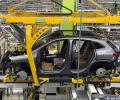
India's total automobile retail sales recorded a significant 9.55 per cent year-on-year growth in May, reaching an all-time high of 25,31,067 units, driven by strong performances in three-wheelers, passenger vehicles, and tractors, despite prevailing heatwave conditions and fuel price pressures.

Commerce and Industry Minister Piyush Goyal on Sunday said Indian goods will have a competitive advantage in US markets compared to products from China and other competitor countries, which face higher levies, following the reduction in reciprocal tariffs to 18 per cent.

'...A new challenge has emerged in the form of Mythos.'

American industry groups sought punitive tariffs on Indian goods at USTR hearings, while Indian officials defended the country's manufacturing growth as demand-led and WTO-compliant.

Despite current headwinds, India remains the world's fastest-growing major economy and should not allow near-term challenges to obscure its long-term growth potential, said Jane Fraser, Citi Chair and Chief Executive Officer.

The Indian rupee depreciated 16 paise to settle at a fresh lifetime low of 96.86 against the US dollar, marking its ninth consecutive session of decline, driven by elevated global crude prices and a strong dollar.

Domestic institutional investors (DIIs), mostly mutual funds and insurance companies, overtook foreign portfolio investors (FPIs) in ownership of NSE-listed companies in the March quarter of 2025. According to Prime Database, DIIs held a 17.62 per cent stake, up from 16.89 per cent in the December 2024 quarter.
